East Tennessee’s heating season doesn’t announce itself — one weekend it’s porch weather, the next there’s frost on the windshield and everyone’s thinking about the first fire. The homeowners who enjoy their fireplaces all winter are the ones who ran the checklist before that first cold snap. Here’s the list we give our own families, in the order that matters.
1. Book the Sweep (Do This Part First)
The annual sweep and NFPA 211 Level 1 inspection is the foundation everything else sits on — and late August through September is the smart window: shortest wait, easiest scheduling, and your flue gets its full check before anyone strikes a match. By late October, every procrastinator in the county calls the same week. Book the sweep here, or read our frequency guide if you’re not sure your usage warrants one.
What the visit buys you beyond the cleaning: a verified flue (camera-checked if anything’s changed since last season), a documented crown/cap/flashing look from the roof, and a written report. That’s your fire-safety baseline for the whole winter.
2. Check the Damper Before It Matters
Open it fully, close it fully — verify the travel before the first fire. A damper stuck part-open is the classic cause of the smoky first fire of the season (and a mild one to repair before it becomes a loud one). If it’s a top-sealing damper, check the cable and closure too.
3. Look at What You Can See
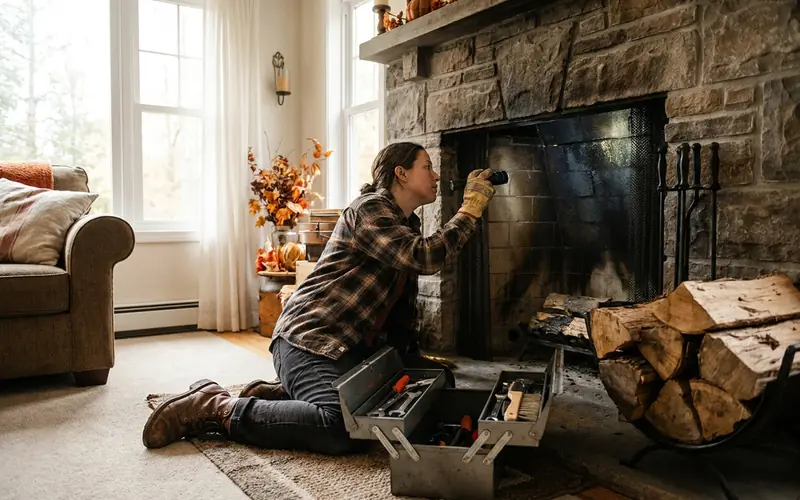
Five minutes with your eyes, every fall:
- The firebox: mortar joints between firebricks intact, no crumbling, no loose brick
- The smoke shelf area: no debris fallen in over summer — leaves, twigs, nesting material (if you find nest material, don’t burn until the flue’s cleared; see our animals-in-the-chimney guide)
- The chimney from the yard: cap present and level, no visible crown crumbling, no masonry bits at the roofline
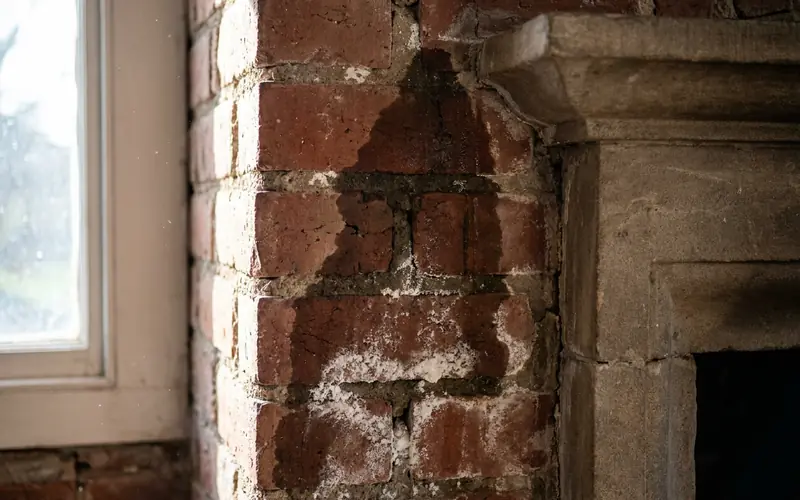
- The wall and ceiling near the chimney (inside): no new water stains since spring — stains mean a summer leak that wants fixing before burning season, see leak repair
4. Audit the Woodpile
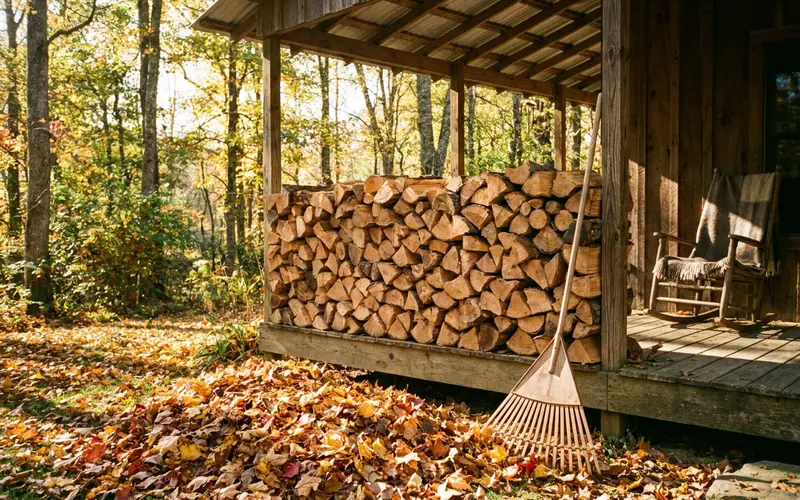
The cheapest chimney maintenance on earth is dry wood. Before the season: meter-test a few splits (under 20% moisture = ready; see our firewood guide), move your best-seasoned wood to the easy-access spot, and start the new-stack clock for next year. Burning green wood in a cold chimney is the fastest recipe for a smoky, creosote-heavy season start.
5. Prep the Room
Hearth rules that homeowners forget between seasons:
- Clearance stays clear: nothing within three feet of the hearth opening — furniture drifts toward fireplaces all summer
- Smoke & CO detectors: test every fall, replace batteries, replace units older than 10 years — this is the season they exist for
- A fire extinguisher within reach of the room, and household knowledge of where it is
- Screens or doors: whatever your system uses to stop sparks, have it in place before the first fire, not after
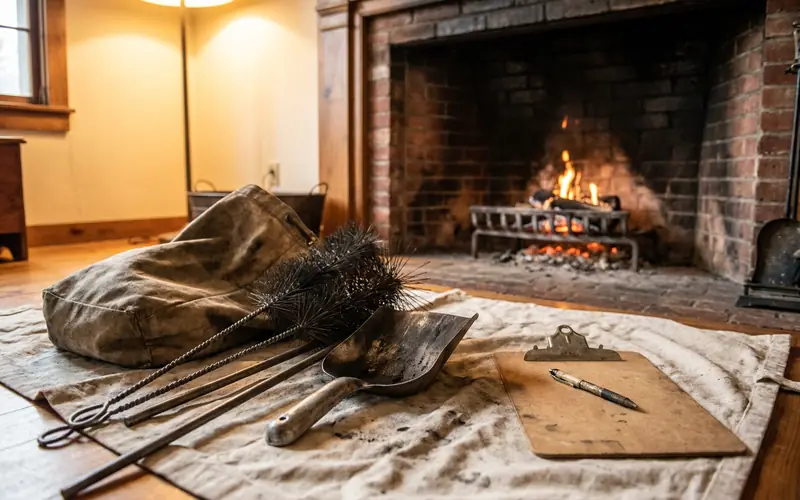
- A fireplace tool set that’s actually functional — and a metal ash bucket with a lid for coals
6. Season-Opener Fire Etiquette
The first fire of the year has its own physics — the flue’s been cold since April:
- Open the damper fully (then trust but verify: feel the draft reverse with a lit match held near the damper)
- Prime the flue: a lit roll of newspaper held up near the damper for 30–60 seconds warms the column and flips the draft — the difference between a clean start and a smoky room
- Kindling first: small, hot, and fast beats one big log smoldering to death
- Build up to full logs gradually — the masonry warms with the fire
7. The One Question Worth Asking a Pro
Every fall, before the first fire, ask yourself honestly: did anything change since last season? New insert or stove (Level 2 required), chimney fire you heard or suspected (Level 2, no burning until), lightning strike or storm damage near the stack (get it looked at), house sale on the calendar (inspection before closing). Changes in the system outrank every calendar.
That’s the list. Run it in September and your fireplace season starts with a match instead of a mess. Need the professional half of the checklist — the sweep, the inspection, the camera pass? Request a free quote or call (865) 309-5432. We’ll make sure the whole system’s ready before the first cold snap gets ambitious.