Every town in East Tennessee has a handful of chimney companies, and every year a few more appear with fresh trucks and fresh websites. Most are honest, hardworking tradespeople. A few are lead-generation operations wearing work shirts. And since none of it is obvious from a lawn sign, this guide exists: how to evaluate a chimney sweep before you book, what a professional visit actually includes, and the handful of tells that separate the companies you want from the ones you don’t.
Print this list or just keep it handy — it works for any company you’re considering, including us.
Start With What the Visit Should Actually Include
A professional chimney sweep isn’t a guy with a brush — it’s a systemized visit. Before you book anywhere, ask what the appointment covers. The answer you want to hear includes all of:
- A NFPA 211 inspection, not just a cleaning. The national standard pairs the two for a reason: sweeping a flue without inspecting it means problems stay hidden behind the soot that just got removed.
- The full flue — brushed top to bottom with equipment sized to your chimney, not a quick pass with one brush.
- The smoke chamber and smoke shelf, not just the visible firebox.
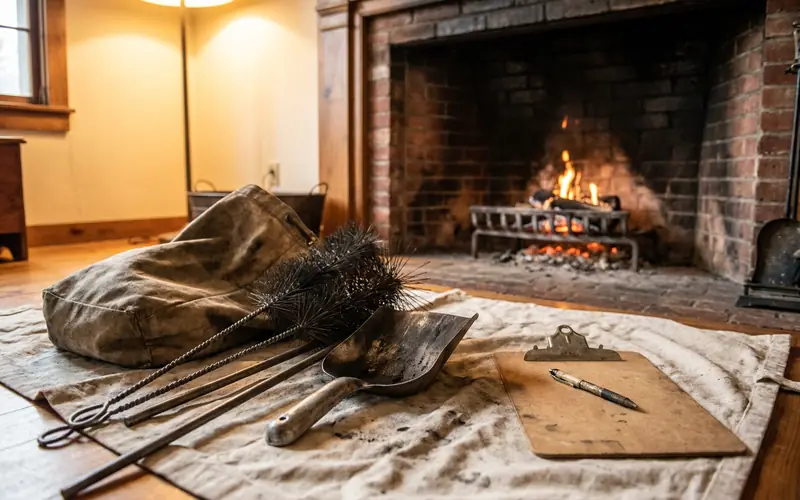
- Containment — drop cloths and HEPA-filtered vacuum running at the firebox during the whole sweep, so soot stays out of your living room.
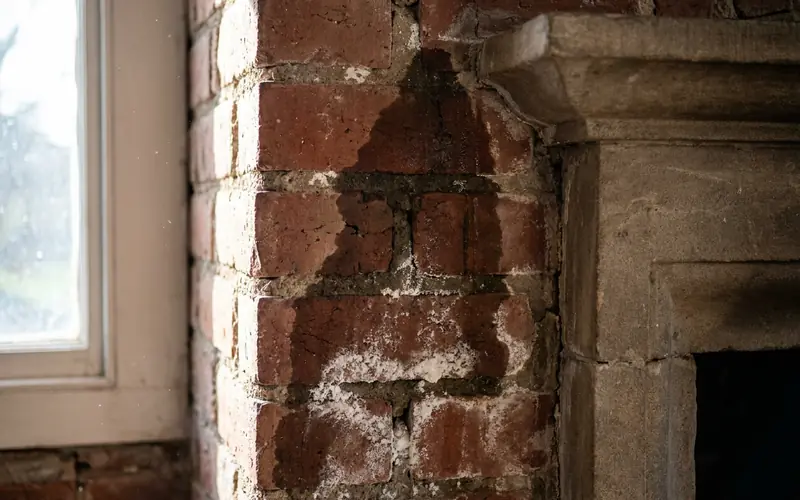
- Documentation — before-and-after photos of your flue and written findings. If a company “doesn’t do written reports,” that’s your answer.
- A plain-English explanation of anything found, prioritized: what’s urgent, what can wait, what’s fine.
Companies that skip items on this list aren’t necessarily dishonest — some are just fast, cheap operations. But fast and cheap has a way of becoming expensive later, in a trade where the whole job is protecting your house from fire.
Questions Worth Asking Before You Book
- “Do you follow NFPA 211?” You don’t need to know what the standard says — just watch how they answer. A pro answers instantly and specifically; a pretender stalls or bluffs.
- “Will I get photos of what you find?” Documentation is standard practice in the modern trade. Hesitation here matters.
- “How long have your techs been doing this?” Chimney work has real safety stakes; you want the people on your roof doing it regularly, not seasonally.
- “Are you insured, and can I see the certificate?” Any reputable company says yes without being asked twice.
- “What happens if you find nothing wrong?” The best possible answer is enthusiasm for telling you your chimney is healthy. Companies that seem disappointed by good news have a business model problem.
- “Do you subcontract?” There’s nothing inherently wrong with it — but the company you hired should be accountable for the people who show up.
The Red Flags to Walk Away From
Any single one of these is worth ending the conversation:
- Verbal-only findings with urgency attached. “Big problems up there, dangerous — we can fix it today” with nothing you can look at is the oldest play in the trade. Honest techs show photos and explain them slowly.
- Pressure tactics of any kind. “Today only” pricing, scary framing about your family’s safety, or reluctance to let you get other quotes. Legitimate work sells itself.
- The price doubles on the roof. A quote that changes once the tech is up the ladder — for access they could plainly see from the driveway — is a preview of the whole relationship.
- Recommended-everything syndrome. Every chimney eventually needs work; no chimney needs everything. If the list is enormous and the photos are thin, get a second opinion.
- No written anything. No report, no itemized quote, no warranty paperwork. Your insurance company — and your future self — need a paper trail.
How to Read Reviews Like a Local
Google reviews are the modern referral network, and East Tennessee homeowners are generous with detail. Read past the star count and look for the pattern: do reviewers mention photos, punctuality, cleanup, straight answers? Do the company’s responses to negative reviews sound like a business owner or a lawyer? A handful of specific, detailed reviews from Knoxville, Maryville, or the Tri-Cities beats a wall of five-star one-liners every time.
And ask your neighbors — in this region, someone on your street has used the company you’re considering. Chimney reputations in small towns are earned one roof at a time.
What Should It Be Like When They Arrive?
A professional visit feels a certain way, and you’ll know it within five minutes:
- They protect your home first — tarps from the hearth to the door before anything else comes off the truck.
- They inspect before they clean, and tell you why: sweeping a damaged flue without knowing it can make things worse.
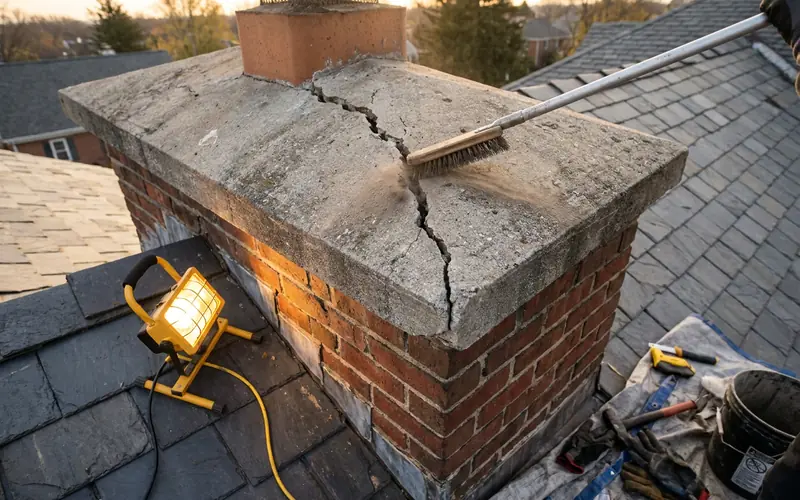
- They show you what they find — camera views, photos on a phone, the actual cracked crown from the roof. Evidence, not adjectives.
- They quote before they work — and the price they quote is the one you pay.
- They leave no trace. A clean living room isn’t a favor; it’s part of the job.
If any of that feels off in the moment, you’re allowed to stop the visit and ask questions. It’s your home.
One More Thing: The Annual Relationship
The best chimney company for you isn’t a one-visit decision — it’s the one you’ll call every fall for the next decade. Choose for the relationship: the crew that remembers your flue, keeps your records, tells you when work can wait, and shows up the same way every year. That’s the company whose name goes on the fridge magnet, not the one that goes on the cautionary-tale list.
That’s exactly the standard we hold ourselves to — and the reason we wrote this guide honestly enough that it works even if you hire someone else. (Though if you’d like the version with photos, a Level 1 inspection included, and a cleanup you won’t believe, our sweep page has the details.) Questions about a quote you’ve received from anyone — including us? Call (865) 309-5432 and we’ll give you a straight second opinion.