“How often does my chimney really need cleaning?” — it’s the first question every homeowner asks, and the honest answer has a floor and a ceiling. The floor is the national standard: once a year, every year you use it. The ceiling depends on how you burn, what you burn, and where in East Tennessee your home sits.
The National Standard: The Annual Inspection
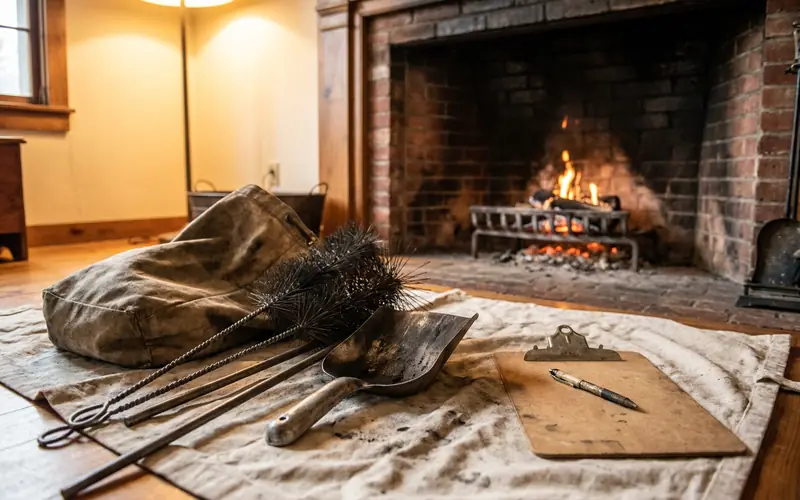
NFPA 211 — the fire-safety standard our entire trade answers to — requires that chimneys, fireplaces, and vents be inspected at least once every year for any system in service, and cleaned whenever creosote deposits reach 1/8 inch. Notice the two parts: the inspection is annual regardless; the cleaning is condition-based. In practice, for most homeowners who burn wood, those two schedules collapse into one annual visit — the sweep inspects, and if there’s anything worth removing, removes it.
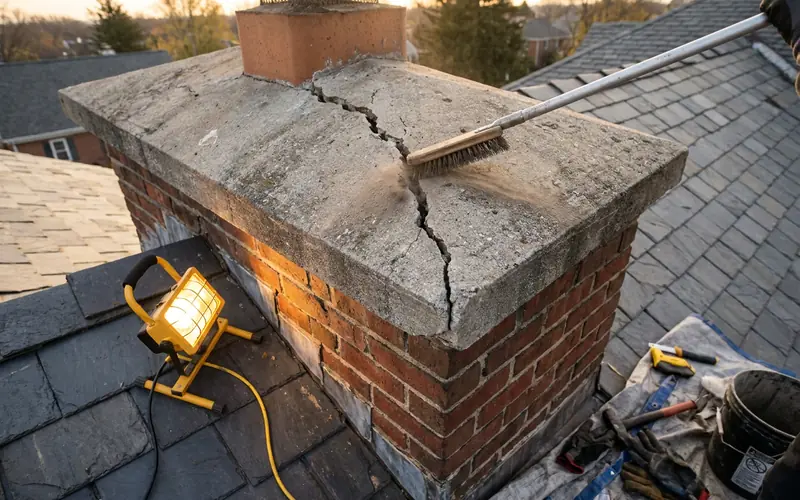
If your fireplace is decorative and truly never used — the answer changes a bit: the annual inspection still matters (unused chimneys still weather and crack), but sweeping an unused flue is pointless. Cap it, inspect it, move on.
What “It Depends” Actually Depends On
How Much You Burn
The single biggest variable. A few Thanksgiving-and-Christmas fires build almost nothing; a family that runs the fireplace four nights a week from October to March builds a season’s worth of creosote by spring. East Tennessee heating season runs roughly October through March in the valley — longer up toward the Tri-Cities and the mountains.
What You Burn
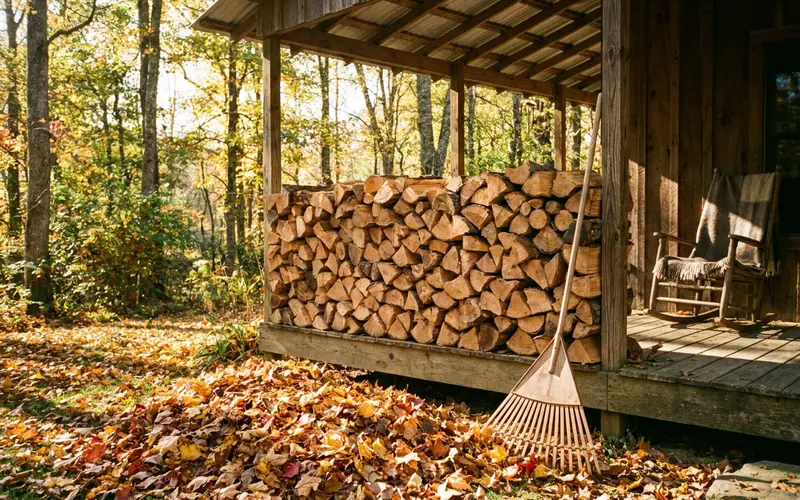
Seasoned oak and hickory burn hot and deposit slowly. Green wood, construction scraps, and “whatever was stacked by the porch when we moved in” smolder and coat flues fast. Wood moisture is the whole game — our East Tennessee firewood guide has the specifics on seasoning and stacking.
How You Burn
Air-starved overnight burns make glaze; hot, smaller fires make light flakes. Damper habits matter more than most homeowners realize — see our creosote stages guide for what smoldering does over a season.
Your Appliance
Modern EPA-certified stoves and inserts generally burn cleaner than open fireplaces — when they’re on right-sized liners and run per the manual. Older stoves venting into oversized flues can be creosote machines. If your setup is the second one, the fix is often a properly sized stainless liner — see chimney relining.
Your Chimney Itself
Exterior chimneys cool faster (more condensation). Tall flues cool more at the top. Homes near the water or up in the hills catch weather that keeps flues damp. None of this means your chimney is bad — it just shifts the calendar.
The Honest Schedule for East Tennessee Homes
After a few thousand regional jobs, here’s the schedule that actually holds up:
- Occasional-ambiance fireplace (a dozen fires a year): annual sweep + Level 1 inspection. Done.
- Weekly winter fireplace: annual sweep, without exception — and don’t let it slip to “every other year,” that’s the pattern that builds Stage 2 creosote quietly.
- Primary-heat wood stove or insert (daily burning): twice a year — late summer/early fall before the season, and a mid-winter check during a warm spell. Daily burners in Cocke County and the Tri-Cities know exactly why.
- Vacation rental with a fireplace (Sevier County especially): twice a year minimum, quarterly for high-occupancy cabins. Guests burn like it’s a hotel — because to them, it is. Rental owners: our Sevierville page covers the documentation side.
- Anyone who smells sour smoke or sees black flakes: stop reading schedules and book a sweep — those signs outrank every calendar.
Why “Annually” Beat “Whenever It Looks Bad”
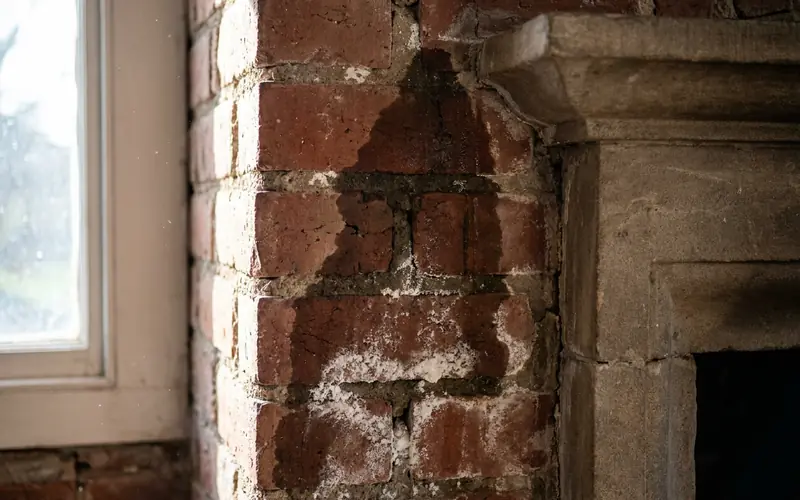
Chimneys hide their condition — that’s a structural feature of being a chimney. The flue you cannot see builds the creosote you cannot assess. The annual visit exists precisely because homeowners can’t self-diagnose, and the cost of the checkup is a rounding error against the cost of the alternative.
The homeowners who ask the frequency question and then book annually? They spend less on chimney care over twenty years than anyone else we serve — because annual visits keep every problem they’ll ever have small, cheap, and scheduled.
Questions about your specific setup? Call (865) 309-5432 — tell us what you burn and how often, and we’ll tell you the honest schedule for your house.