Ask a chimney sweep what they’d change about most fireplaces in East Tennessee, and the answer has nothing to do with the chimney: it’s the wood. Wet wood is the root cause behind more smoky rooms, slow drafts, and glazed flues than any masonry problem we could name. The good news: our region grows some of the best firewood in the country — if you know what to buy and how to store it.
Species, Ranked for Tennessee Stoves and Hearths
The Premium Fuels
- Oak (red and white). The Tennessee standard — dense, long-burning, steady coals. White oak edges red for heat per cord. The catch: oak needs the longest seasoning of the common hardwoods (12+ months split; some say 18 for big rounds). Patience is literally the product.
- Hickory. Our premium fuel — hotter than oak by a nose, outstanding coals, and it smells like the best campfire of your life. Harder to split, pricier to buy, worth it if you can get it.
- Locust (black). One of the hottest woods in North America — burns slow and fierce. Keep an eye on stove temps with locust; it doesn’t kid around.
Perfectly Good Everyday Woods
- Hard maple (sugar). Dense, steady, clean — a great balance of availability and performance across the valley.
- Ash. The overachiever: one of the few hardwoods that’s honestly usable fairly soon after splitting, burns steady, splits easy.
- Beech and cherry. Solid, clean burns; cherry brings a mild sweet smell that fireplace owners love.
Use With Care (or Not at All)
- Soft maples, elm, sycamore. Lower density, faster burn, more ash — fine for shoulder-season fires, mediocre as your primary fuel.
- Yellow poplar (tulip poplar). East Tennessee’s most common big tree is one of its worst fuels — light, fast, smoky. Burn only if free and desperate.
- Pine and other softwoods. Not “never” (kindling and quick hot starts, and mountain families burn it knowingly), but resinous softwoods coat flues fast — if softwood is part of your woodpile, your sweep needs to be an annual certainty. In an open fireplace expect sparking.
- Never: treated lumber, painted wood, pallets with mystery stains, or driftwood (salt + combustion chemistry = toxic). These don’t belong in any fire that vents into a home.
Seasoning: The 20% Rule
“Seasoned” has an actual number: roughly 20% moisture content. Green (fresh-cut) hardwood runs 60%+ — and every excess pound of water in a log costs you heat to boil off, makes smoke instead of flame, and condenses as creosote in your flue. An inexpensive moisture meter from any hardware store settles the question instantly: split a piece, press the meter to fresh-split face, read the number. 20% or less = ready. Above 30% = keep waiting (or be honest with yourself that you’re buying smoky, creosote-heavy fires).
How to Season Wood in the Tennessee Valley
- Split it. Split wood dries several times faster than rounds — more surface area, and the bark stops being a wrapper.
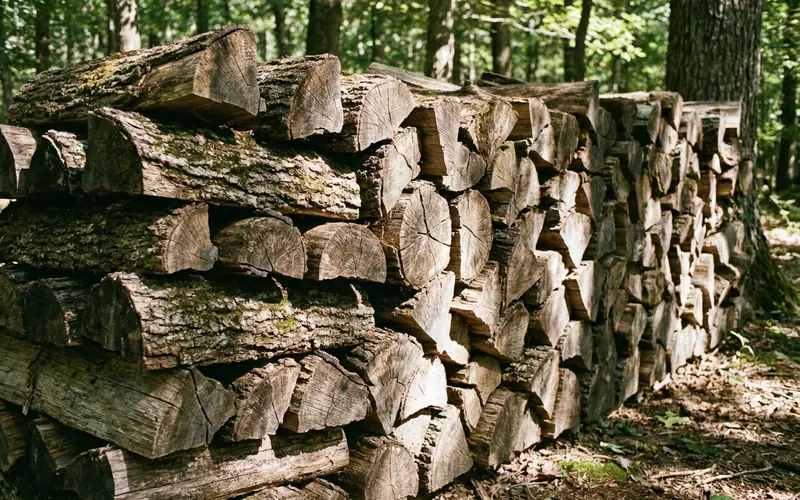
- Stack off the ground — rails, pallets, anything that stops the stack from wicking moisture from the soil.
- Stack loose, not tight walls. Air needs to move through the pile; leave an inch or two between rows where the prevailing breeze can pass.
- Top cover only. Cover the top of the stack against rain; leave the sides open to breathe. Wrapping the whole stack in a tarp is how you make compost, not firewood.
- Give it a summer. Sun and wind do the work — a stack put up in spring is often stove-ready by fall; oak wants a full year-plus. The best habit: this year’s stack is for two winters from now.
- Bring in what you’ll burn. A few days indoors near (not on) the hearth finishes off any surface moisture — but a week-plus inside dries out your house, not your wood.
Buying Wood in East Tennessee: Cords and Honesty
A full cord is 128 cubic feet of stacked wood — a stack 4×4×8. “Face cord,” “rick,” and “rack” mean one row of stove-length wood: a third of a cord (if the wood is 16″). Prices vary by species and season, but the two things worth insisting on: known species and honest stacking (loose-throw ” cords” can be 25–30% less wood than you paid for). The dump-truck “load” is the Wild West — fine when it’s cheap enough, but do the math on what’s actually in the bed.
What This Has to Do With Your Chimney
Everything, and it’s the reason a sweep writes a firewood guide: dry wood is the cheapest chimney maintenance that exists. Dry fuel burns hot and clean — less smoke, less condensation, less creosote, fewer problems. Wet fuel is the engine of every Stage 2–3 flue we’ve ever cleaned (see our creosote stages guide for what that looks like).
Stack good wood dry, burn it hot, and your annual sweep visit stays the short, cheap, boring kind. That’s the whole system, working as designed.