A homeowner looks at their chimney with binoculars, sees cracks, and types “chimney repair” into a search box. Then the quotes come — wildly different numbers from one company to the next — for what the homeowner was told was “the same problem.” Almost always, it isn’t the same problem. The chimney trade’s two most-confused scopes are crown repair and rebuilding, and the difference between them is whether your masonry is still alive.
Here’s how to think about your own chimney’s situation, in plain English.
First, What the Crown Actually Is
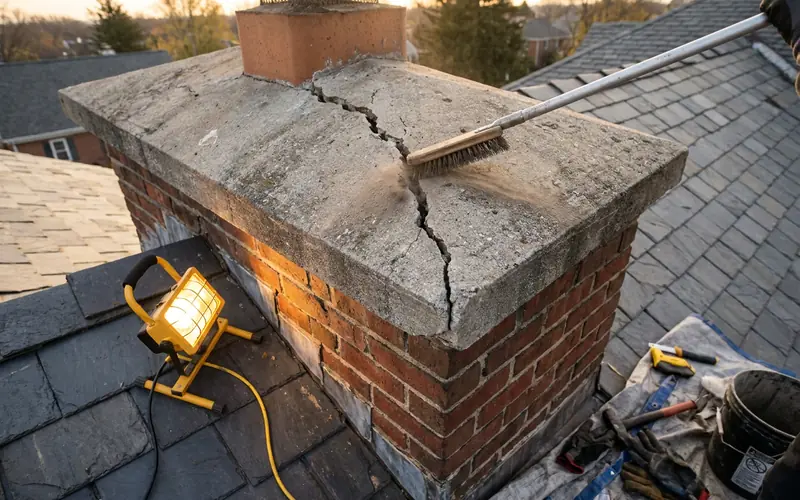
The crown (sometimes called a “cap” or “wash” — confusingly, since the metal cap is also called a cap) is the concrete top of your chimney — the sloped slab that sheds water off the stack and away from the flue. It’s the chimney’s umbrella, and it’s the single most important water-detail on the entire system. When the crown cracks — and it almost always eventually does — water stops shedding and starts pouring: directly into the masonry core, where East Tennessee freeze-thaw cycles turn each crack into a growing fault.
When Crown Repair Is the Right Answer
The situation: cracks in the crown itself — hairline to open — but the masonry below is sound. Joints are tight, bricks or stone aren’t spalling, the stack is plumb, and the flue liner is intact on camera.
What it involves: cleaning the cracked crown properly, repairing/resurfacing with a crown-grade material (or rebuilding the crown fresh where it’s too far gone but the chimney isn’t), checking or replacing the cap on top, and — ideally — confirming the flashing while we’re up there. It’s typically a half-day, few-hundred-dollar job, and done right, it ends the water intrusion completely.
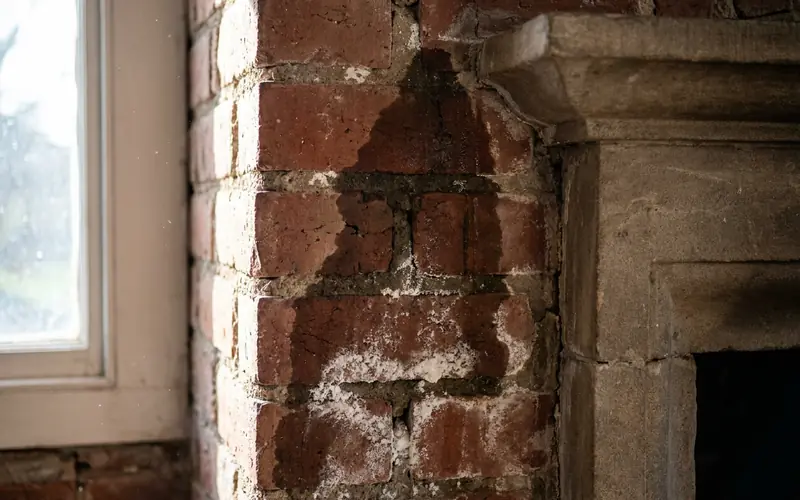
The tell: water stains that track to rain (any rain, not just wind), sandy debris in the firebox, cracks you can see from the yard with the naked eye — on a chimney whose brickwork otherwise looks tight and healthy.
When a Rebuild Is the Honest Answer
The situation: the failure isn’t a detail on the chimney — it’s the chimney. From our East Tennessee job files:
- Structural lean or separation — the stack is tilting or pulling from the house (this one ends every repair conversation instantly)
- Widespread masonry failure — a quarter or more of mortar joints receded, brick faces popping across whole courses
- Flue failure the masonry can’t survive without — cracked liners deep in a stack that needs opened anyway to repair properly
- Chimney-fire damage running through the stack — heat that cracked the masonry from inside
- Previous repairs failed honestly — when patch-on-patch has run out of chimney to patch
What it involves: teardown of the failed section (a partial rebuild above the roofline is the most common scope) or the full stack, rebuilt with matched masonry, new liner integrated, new crown poured properly (sloped, reinforced), new cap and flashing. Details and honest pricing on our chimney rebuilding page.
Why They Get Confused (and Confusedly Quoted)
Three reasons these scopes get tangled:
- Crown cracks look like chimney cracks from the ground. The crown is what you see from below — its cracks read as “the chimney is cracked” even when the masonry under it is perfect.
- Water runs down from the crown and stains the masonry. A crown can fail badly enough that the stack looks wrecked — efflorescence, staining, even spalling near the top — while remaining structurally fine once the water source is repaired.
- Sales pressure. A crew that profits on rebuilds quotes rebuilds; a crew that only does repairs quotes repairs. The diagnosis follows the business model unless someone’s carrying a camera and leveling tool.
How We Diagnose It (And How You Can Too)
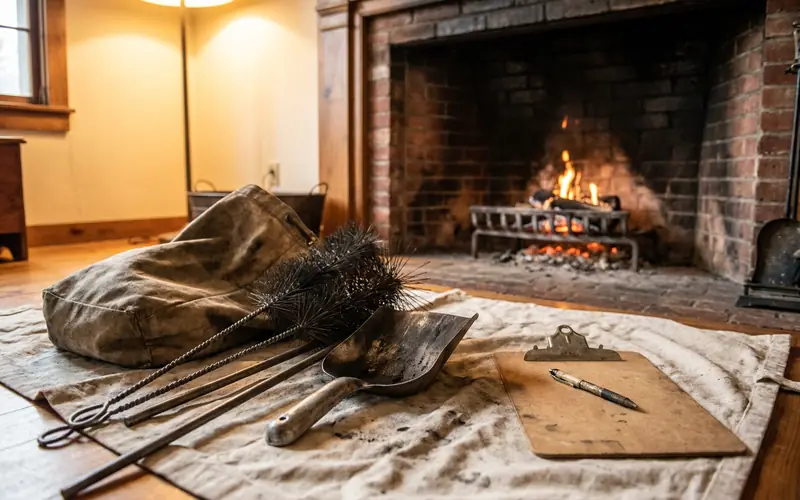
Our sequence: photos from the roof, close-up crown condition, masonry joint survey around the stack, level/plumb check, and a camera pass of the flue. That last one matters more than homeowners expect — the liner’s condition often decides whether a partial rebuild makes sense or the whole conversation moves to full rebuild. (Details on inspection levels here.)
Your part is simpler: ask to see the photos. A legitimate repair-or-rebuild diagnosis is visible — cracked crowns, open joints, and leaning stacks all photograph beautifully. If a company can’t show you the evidence, they’re asking you to fund a hunch.
The Honest Bottom Line for East Tennessee Homes
Across our region, the vast majority of “cracked chimney” calls turn out to be crown-and-detail repairs on sound chimneys — modest work and a strong umbrella. The genuine rebuild cases are less common and usually obvious once someone’s on the roof: lean, widespread failure, fire damage.
Either way, the answer costs the same to find out: one inspection visit. See chimney repair and leak repair for the fix details, or call (865) 309-5432 — we’ll show you exactly what your chimney needs and what it doesn’t.