Creosote is the reason chimney sweeps exist. It’s the black, flammable byproduct that condenses out of wood smoke as it cools inside your flue — and understanding its three stages is the difference between a routine cleaning and a chimney fire waiting for its moment.
Here’s how the stages work, what they look like from your living room, and what each one demands from you.
How Creosote Forms in the First Place
Wood smoke is a cocktail of water vapor, unburned particles, and volatile organic compounds. As it rises through a flue, it cools — especially in a tall, wide, or exterior chimney where the masonry is cold. When smoke gases hit flue walls that are cooler than roughly 250°F, they condense. That condensation is creosote: it starts as a light powder and, given heat and time and more condensation, hardens into something closer to lampblack tar or driveway sealant.
East Tennessee’s climate plays a role more than you’d think: cold, damp winter nights mean cooler flues and faster creosote formation — especially in the mountains around Newport and the Tri-Cities where the heating season runs longest.
Stage 1: The Dusting
What it looks like: a soft, flaky, sooty powder — like dark gray ash — coating the flue walls. Wipes away with a brush or even a finger.
How it happens: good fires in a healthy system. Hot, well-seasoned wood burned with adequate air produces less condensation, and what does form stays powdery.
What it means for you: nothing alarming. Stage 1 is what a routine annual sweep removes in about an hour. This is the stage you want your system to be in, forever.
Stage 2: The Crust
What it looks like: hardened, shiny-in-spots black crust — crunchy flakes and curly plates that chip off in chunks. It feels like burnt sugar or hardened tar at the edges.
How it happens: repeated condensation cycles on top of Stage 1 deposits — smoldering fires, cooler flues, wet or green wood, overnight burns with the air choked down.
What it means for you: time for a professional sweep, and probably a conversation about how you’re burning. Stage 2 doesn’t brush off with a hardware-store kit; it takes pro-grade equipment and know-how. Left alone, it thickens toward Stage 3 — the NFPA 211 benchmark is sweeping when deposits reach 1/8 inch, and Stage 2 is usually the signal that you’ve crossed it.
Stage 3: The Glaze (The Dangerous One)
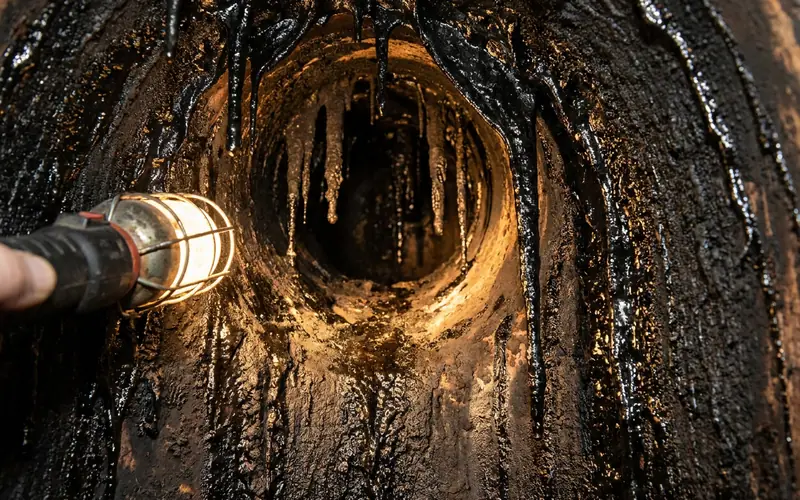
What it looks like: a dense, shiny, lacquer-like coating — thick, drippy-looking, and hardened, like stove-top tar. It can look like it’s been painted on the flue walls.
How it happens: Stage 2 deposits that got reheated (from fires above them), compressed, and re-coated repeatedly. Restricted-air burning — the “load it big, choke it down, walk away” pattern — is the classic recipe. So are green wood and very cold flues.
Why Stage 3 is genuinely dangerous:
- It’s fuel, not residue. Stage 3 glaze has the combustible density of a manufactured fuel. It ignites at high fire temperatures and burns ferociously — flue fires from glaze exceed 2,000°F.
- It can’t be brushed out. Standard brushes ride over the glaze. Removal requires rotary chains or chemical treatment — pro equipment and the judgment of when to use each.
- It signals bad history. A Stage 3 flue has usually been misused for a while, which means the camera inspection after removal isn’t optional — heat from prior fires may have already cracked tiles you can’t see.
How to Keep Your Flue in Stage 1 (The Short List)
- Burn seasoned wood. Wet wood smolders; dry wood burns hot and clean. 12+ months split and stacked for our East Tennessee hardwoods. Our firewood guide covers the details.
- Don’t starve the fire. Choking air to stretch burn time is the #1 glaze-maker. Burn smaller, hotter loads instead.
- Keep up the annual rhythm. A flue that’s brushed every year never gets the chance to progress. This is the entire business model of chimney safety, compressed into one habit.
- Watch for the signs. Black flakes in the firebox, a sour smoke smell in the house after fires, slower draft than last season — any of these, book a sweep and let the pro stage-grade it.
The Honest Summary
Stage 1 is normal. Stage 2 is a deadline. Stage 3 is a hazard with a calendar. The whole point of the annual sweep is that most East Tennessee homeowners never see past Stage 1 — problems like glazed flues happen in chimneys that skipped a few years and burned like the skip never happened.
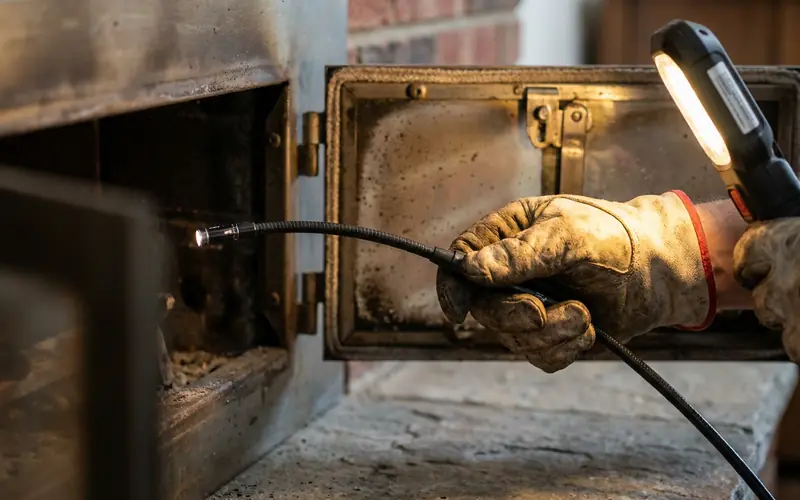
If you’re seeing black, shiny crust in your firebox or your chimney hasn’t been swept in a couple of winters, book a professional sweep — we’ll show you exactly which stage your flue is in, on camera, before any cleaning begins.