Experienced sweeps read a chimney the way mechanics read an exhaust pipe: the plume tells you how the system is running. You can learn the same trick in about five minutes, and it’s genuinely useful — smoke color is a real-time readout of your fuel, your draft, and your firebox habits, and catching the change early is the difference between a tweak and a glazed flue that needs a pro.
The Goal: Almost No Visible Smoke
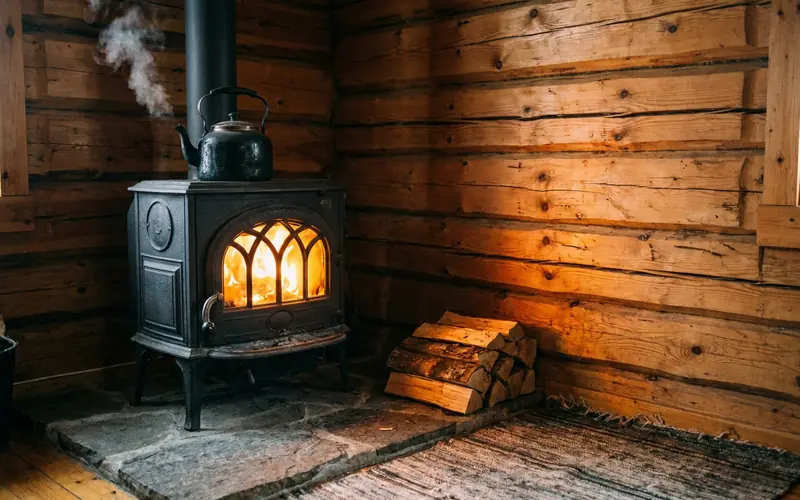
A properly burning wood fire — dry fuel, adequate air, hot firebox — produces a nearly invisible heat shimmer above the stack. Not white, not gray: barely there. That’s what complete combustion looks like. Every color short of that is information.
White / Thick Gray Smoke: The Water Problem
What you’re seeing: steam and unburned particles from fuel that’s too wet. White smoke is your chimney boiling water before it can burn wood.
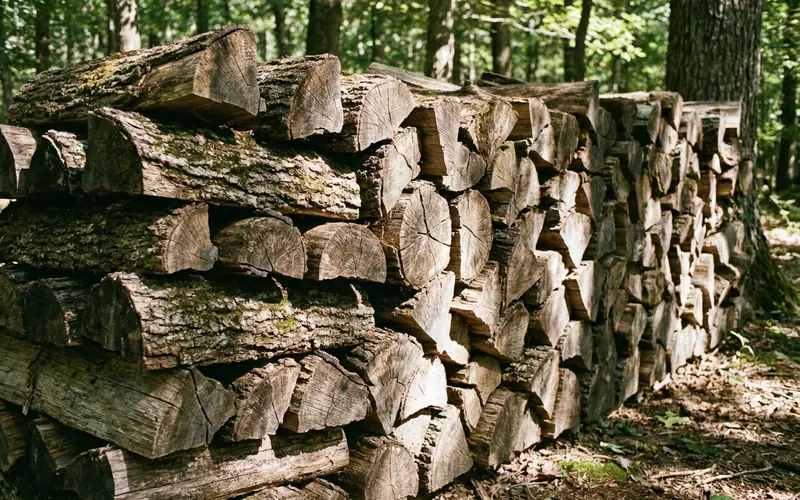
What it means: green or improperly seasoned wood — moisture content way over the ~20% that counts as “ready.” The energy that should become heat in your room is consumed turning water to steam, the fire runs cooler than it should, and the vapor that survives condenses on the flue walls as fast-building creosote. White smoke is inefficient and hard on the chimney.
The fix: the meter-and-the-pile routine — test your wood’s moisture (an inexpensive moisture meter does it), and re-stack what fails. The details on seasoning are in our East Tennessee firewood guide. If you’re buying wood, white smoke on the seller’s demonstration burn is your answer to “is it seasoned?”
Black / Dark Smoke: The Fuel-Load Problem
What you’re seeing: unburned carbon — soot-rich exhaust from a fire that’s smoldering.
What it means: one of two things (sometimes both):
- Air starvation. The fire is loaded with wood and choked for air — damper barely open, stove shut down for an “overnight burn,” logs packed tight. The fire can’t reach combustion temperatures, so it smokes instead of burning.
- Oversized fuel or smoldering loads. Big unsplit rounds and crammed fireboxes make the same slow, sooty burn.
Black smoke is the direct precursor to fast creosote — the exhaust is carrying the fuel for it. This is the fire-building pattern behind every Stage 2–3 flue we’ve ever cleaned, and it’s covered in our creosote stages guide.
The fix: burn smaller, hotter loads — more air, less wood at a time, kindling built up properly. If you run a stove for long overnight heat, learn its lowest clean-burn setting (each model has one) rather than choking it flat.
Dense Smoke + Slow Draft: The Restriction Problem
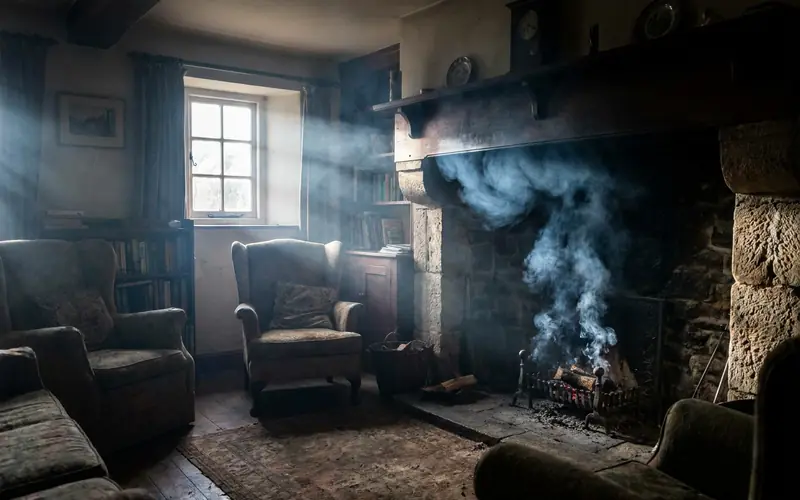
If smoke’s color is unremarkable but the volume is heavy and lazy — puffing, rolling out of the firebox when the door opens, sluggish starts — the issue is flow, not fuel: creosote-narrowed flue, a nest or debris blockage, a damper that’s not fully open, or a cold flue needing a prime before the fire. Heavy smoke at the firebox is a draft diagnosis; see our full smoke-into-the-house guide for the complete breakdown.
The Rare One: Smoke You Can’t See But Can Smell
A faint, persistent smoky smell in the house between fires means downdraft — cold air slipping down the flue carrying old soot. It’s a draft/damper/cap conversation (often a top-sealing damper solves it), not a fire problem. Worth mentioning at your annual service.
Read the Plume, Skip the Problems
The whole system, in one habit: look up at your chimney while your fire runs. Shimmer = perfect. White = your wood’s wet. Black = your fire’s starving. Heavy and lazy = something’s restricted. Each color has a cheap fix when caught early — and a problem that compounds when it’s not.
Smoke’s telling you something you can’t interpret? Call (865) 309-5432 or request a free quote — we speak fluent chimney.