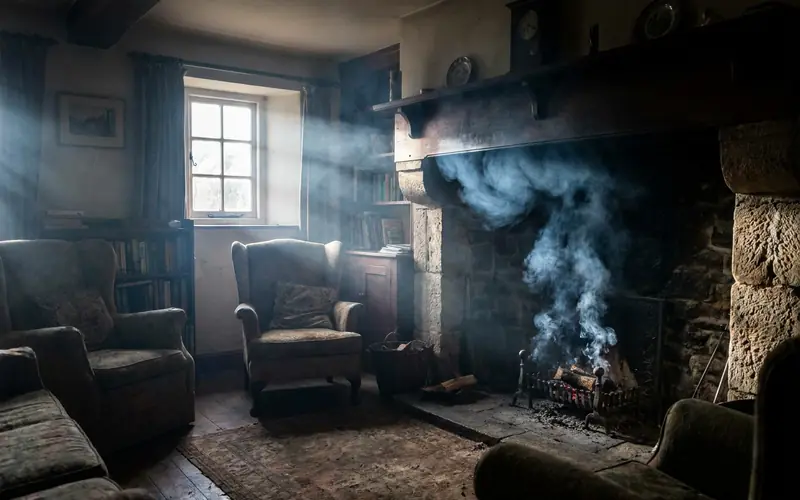
Of all the calls we run, the smoky fireplace call has the most relief in it — because smoke in the living room feels like a defect in the house, and it’s almost always something specific, findable, and fixable. “This fireplace has always smoked” is a sentence we retire a lot. Here are the seven causes we find, roughly in order of how often we find them in East Tennessee homes.
1. The Flue Is Cold (The Classic First-Fire Problem)
A chimney full of cold, heavy air works like a plug — warm smoke from the firebox rises, hits the cold column, and loses. The smoke that can’t go up comes out into the room instead. It’s the signature of the first fire of the season and of every fire in a tall exterior chimney after a cold snap.
The fix: prime the flue before the fire — light a rolled newspaper or a starter stick and hold it up near the damper for a minute until you feel the draft reverse, then build your fire from kindling up. Five seconds of priming prevents an evening of haze. (See our burn-season checklist for the full routine.)
2. The Damper Isn’t Fully Open (Or Isn’t Working)
Embarrassing how often this is the answer — but also how often it’s partly open without the homeowner knowing, or stuck half-open with a warped or debris-jammed throat damper. A damper that opens on a chain, lever, or handle you can’t see is a damper you can’t trust.
The fix: verify the damper’s full travel before every season. If it’s damaged, throat-damper repair or a top-sealing damper (often installed with a new cap) is a modest, high-impact fix.
3. Creosote or Debris Restriction
A flue half-coated in creosote or capped with a nest restricts airflow like a narrowed artery. Fires start sluggish, smoke lingers, and the room fogs. This one compounds: smoldering fires build creosote faster, which restricts more, which smokes more.
The fix: a professional sweep. This is the most common cause we fix in one visit — and the reason a smoky fireplace should always, always be swept before anyone theorizes about it. Our sweep service includes the draft-affecting checks.
4. The Flue Is the Wrong Size for the Appliance
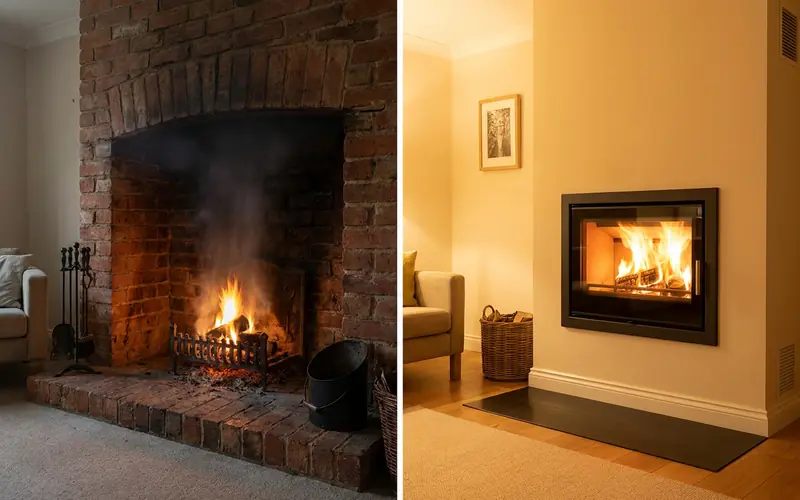
Draft physics require the flue to match the appliance opening. Too big — the classic case of a wood stove or insert venting into an old open-fireplace flue — and the smoke column slows, cools, and stalls. Too small and it chokes. This is the hidden cause behind “my new insert smokes more than my old fireplace did.”
The fix: a properly sized stainless liner. It’s the single most effective fix for appliance smoke problems — see our relining page for how it works and honest pricing.
5. The House Is Too Tight (Negative Pressure)
Every cubic foot of air that goes up the chimney gets pulled from somewhere. Modern tightened homes — new windows, sealed attics, tight weatherstripping — sometimes can’t supply it, so the house finds its makeup air by pulling smoke back down the flue. Clues: smoke problems that got worse after a window/insulation upgrade, fireplaces that only smoke when the kitchen fan or bathroom exhaust runs, doors that slam themselves.
The fix: crack a window in the fire room (diagnosis in real time — if smoke stops, you’ve found it), stop competing exhaust fans during fires, and for a permanent fix, discuss combustion-air supply options with us. Sometimes the smallest fix wins.
6. Wind or the Roofline Itself
Prevailing wind hitting the chimney top from a tall neighboring roofline, a nearby ridge, or even tall trees can push down the flue. East Tennessee homes on ridge lots — we see it all over the Tri-Cities — get this from the terrain. A cap often changes the aerodynamics enough to fix it; in stubborn cases, a draft-enhancing cap or a look at nearby obstructions is the answer.
7. The Fire Itself (Yes, Sometimes It’s the Fire)
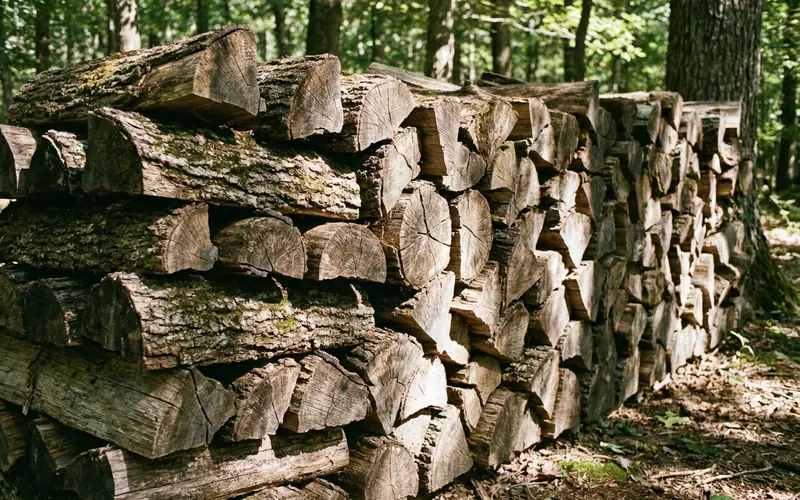
Green wood smolders and makes smoke the flue can’t clear. Overloaded logs packed tight under a cold flue, kindling skipped entirely, the damper opened after lighting (backwards) — smoke follows technique errors every time.
The fix: seasoned wood, kindling-first fires, primed flue, open damper before ignition. Our firewood guide covers what to burn and how to know it’s ready.
When Smoke Means Something Bigger
One caveat to the whole list: smoke that suddenly appears in a fireplace that always worked — especially with any burning smell that isn’t woodsmoke — deserves immediate attention. Blockages, liner failures, and even structure issues announce themselves this way. Stop burning and get an inspection on the schedule.
Chronic smoky fireplace? That’s our favorite kind of diagnosis: specific cause, visible evidence, honest fix. Request an inspection — we’ll find the actual reason and show you on camera.