East Tennessee homeowners ask this the way people ask about trucks: with opinions already formed and a desire for confirmation. But the physics is worth knowing either way, because “wood stove or fireplace” isn’t really a style question in our climate — it’s a heating question, and the numbers are lopsided.
Efficiency, Straight Up
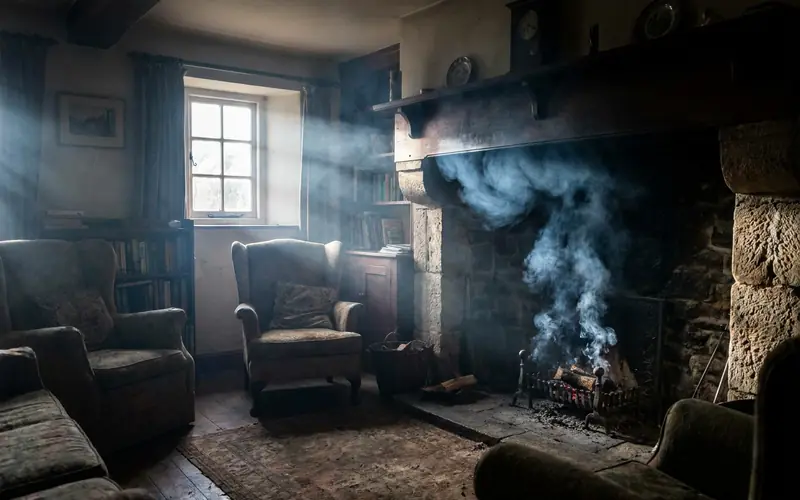
An open fireplace is beautiful, traditional, and thermodynamically honest about what it is: 10–15% efficient at best. Most of the heat goes up the flue — worse, an open firebox actively pulls warm room air up with the draft, so a fireplace can cool the rest of your house while warming a circle of floor three feet across.
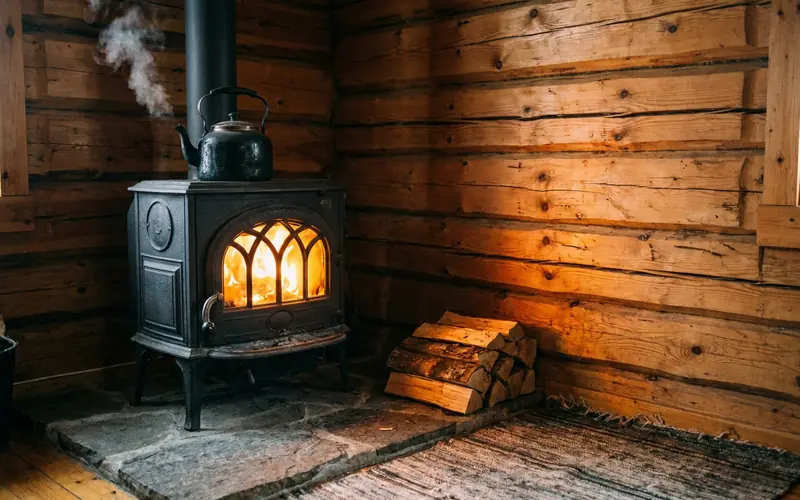
A modern EPA-certified wood stove runs 70%+ efficiency. A sealed firebox with controlled combustion burns the smoke as a second fuel — less wood, more heat, fewer sparks, visibly cleaner chimney (your sweep will confirm it: stove flues on right-sized liners build slower, lighter creosote).
What That Means Across a Tennessee Winter
Our heating season is long enough to matter and mild enough to make wood genuinely economical — especially with electric rates where they are. The practical differences homeowners report:
- Zone heating. A stove placed in the main living space heats the rooms you actually occupy; the central system runs less. This is where the utility bill difference actually shows up.
- Burn length. A stove loaded at 10 p.m. still has coals at 6 a.m. An open fireplace is out (and dumping room heat) within a couple hours of the last log.
- Fuel consumption. For the same usable heat, a stove uses roughly a third to half the wood of an open hearth.
- Outage insurance. Ice storms are a Tennessee tradition; a wood stove is the backup heat that doesn’t care when the grid goes down. This alone drives a lot of Tri-Cities and mountain-area installs.
What the Fireplace Does Better
Fairness matters here. Open fireplaces win on things stoves can’t offer:
- Aesthetics and real estate. A masonry fireplace with a handsome mantel sells houses. Buyers photograph it; appraisers note it. A hearth is the room’s anchor in a way a stove rarely becomes.
- Tradition. Some families have burned the same hearth for generations. There’s no ROI line-item for that, and we don’t pretend otherwise.
- Zoning & placement. Fireplaces go where chimneys already stand; stoves need clearances, floor protection, and a code-compliant flue path — more on that in a moment.
The Compromise Most Tennessee Homes Should Actually Consider
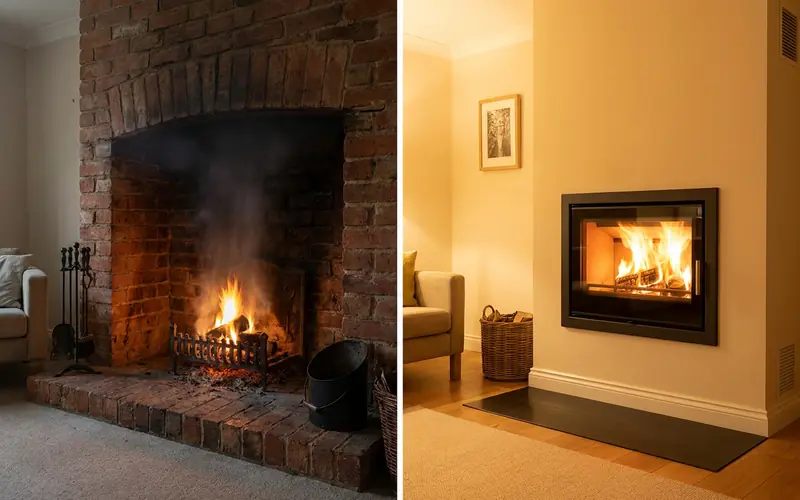
Here’s the honest secret of our trade: the best answer for most homes isn’t stove or fireplace — it’s a wood-burning insert in your existing fireplace. You keep the hearth, the mantel, the room’s focal point; you gain sealed-firebox efficiency in the 70s. It’s the “have both” option, and it’s one of the most satisfying upgrades we install.
The performance catch (there’s always one): an insert needs a stainless flue liner sized to the unit. Inserts venting into a wide old fireplace flue run cooler, build creosote faster, and underperform — the liner is what unlocks the efficiency the manufacturer promised. We cover the details on our fireplace insert page and chimney liner page.
Installation Realities, Compared
- Insert into an existing masonry fireplace: hearth check, insert install, sized liner, blower. Typically a one-day job for us.
- Freestanding stove: hearth pad placement, wall/ceiling clearances per the listing, connector pipe, and either a liner into an existing chimney or a new listed chimney. Done to code, documented for your insurer. Details and honest pricing on our wood stove installation page.
- New open fireplace (building or adding one): full masonry build — the most expensive path, and one we discuss with homeowners honestly when a stove serves the actual goal better.
Which One Is Right for Your House?
Three questions decide it:
- Is your goal heat, or is it evenings? Heat → stove or insert. Evenings → the open hearth is fine, just sweep it annually.
- Is there an existing fireplace and chimney? Sound masonry fireplace → insert is usually the smartest upgrade. No fireplace → freestanding stove with a listed chimney.
- What’s the backup-heat picture? If outages matter (rural, lake, mountain homes), a stove on its own flue is hard to argue with.
Want a recommendation for your specific setup? That’s literally our job. Request a free quote and we’ll look at what you have, how you live, and tell you honestly which answer fits — including “your fireplace is fine, keep enjoying it.”