We’ll say the fair part first: yes, a homeowner with the right tools, the right chimney, the right conditions, and the right expectations can do some of their own chimney maintenance. Some. In some conditions. Now the honest part — what the hardware-store kit’s packaging doesn’t print, and why the DIY math usually doesn’t hold.
What DIY Cleaning Can Actually Accomplish
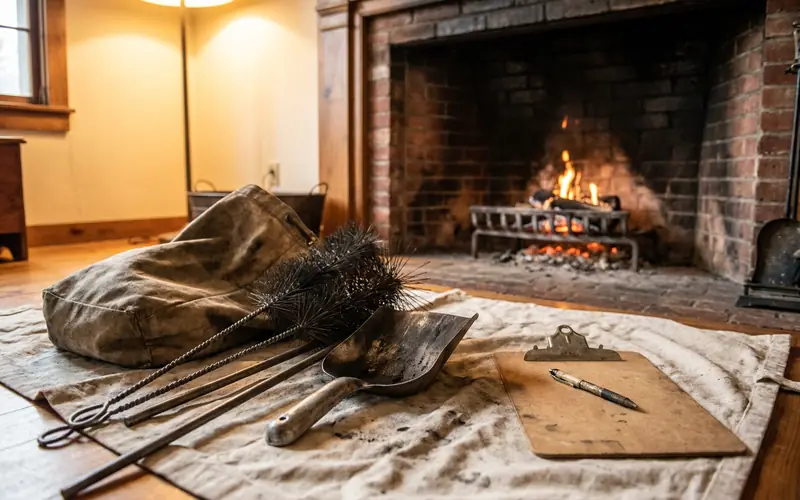
On a straight, healthy, recently maintained masonry flue with light Stage 1 powder, a rotary rod kit from the ground (or a pull-chain kit from the roof, if you like ladders and your roof is walkable) can genuinely remove loose soot. That’s the whole list. If your situation matches every one of those conditions, DIY has real precedent — plenty of rural Tennessee families have run cleaning rods for generations.
The catch is that the list has four conditions, and “my flue is healthy and recently maintained” is the one you can’t actually verify from your living room. Which brings us to the problems.
The Three Things the Kit Can’t Do
1. It Can’t See the Flue
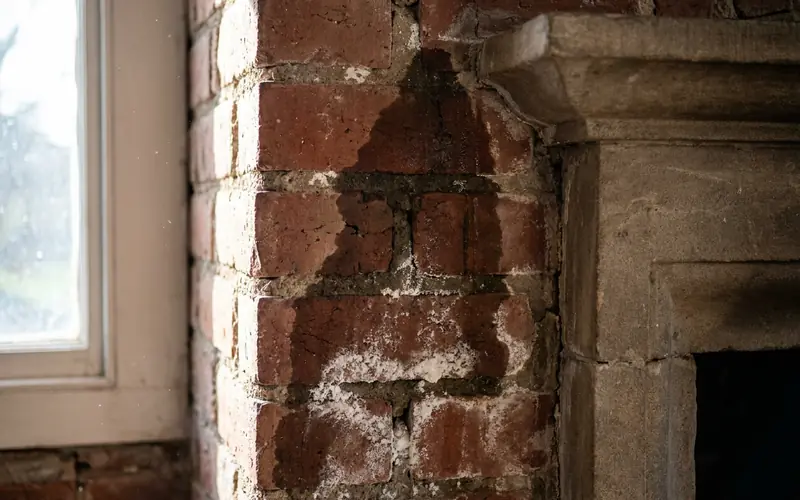
The single biggest limitation — and the one with the most expensive consequences. Cleaning a flue without inspecting it first means brushing a chimney whose condition you’re guessing about. If a tile is cracked, if the liner’s joints have opened, if the masonry behind is spalling — the DIY sweep both misses it and potentially worsens it: aggressive brushing over a damaged liner (or a deteriorated smoke chamber) knocks loose material that was doing its best to hold together.
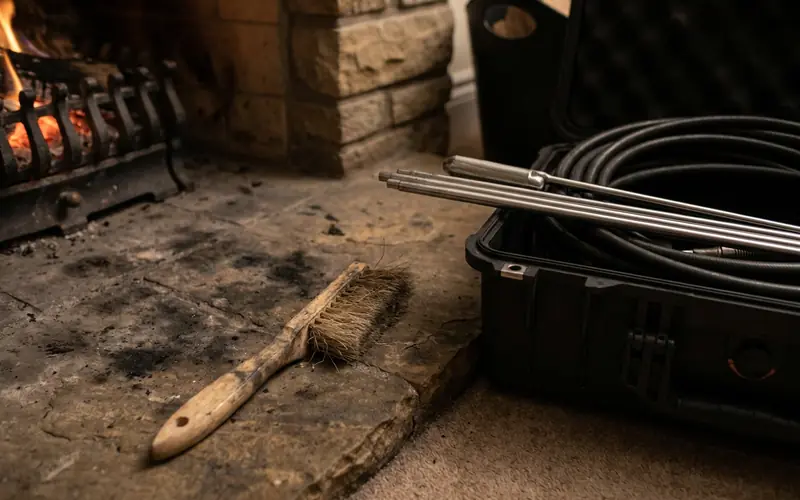
The NFPA 211 standard pairs sweeping with inspection for exactly this reason. Our camera inspections exist because “looked fine from the firebox” isn’t an answer to “is the flue sound.”
2. It Can’t Handle Real Creosote
Stage 1 flakes brush off. Stage 2 crust needs professional-grade equipment and technique. Stage 3 glaze — the shiny, tar-like, genuinely dangerous deposit — does not respond to any kit at any price point; it requires rotary chains or chemical treatment and the judgment of when each is safe. A homeowner who brushes a Stage 3 flue and sees “some black on the brush” can honestly believe the flue is clean while it’s still carrying fuel lining every wall. (The stages are on our creosote guide — know what you’re looking at before you decide you removed it.)
3. It Can’t Contain the Job
The professional part nobody appreciates until the first DIY attempt: containment. Our crews sweep with HEPA-filtered vacuum systems running at the firebox the entire time, brushes sized snug to the flue, drop cloths laid from hearth to door. The DIY stories we hear from across East Tennessee share a genre: the rod got stuck, the brush came apart, the “chimney brush” turn became a soot fountain, the living room turned 1940s London. Soot is fine, oily, and permanent on upholstery. The cleanup alone has sent more than one family to professional help — after paying for the kit.
The Insurance and Safety Side
Two quiet points worth weighing:
- Coverage. If a chimney fire happens, insurance carriers ask for maintenance history. A documented professional sweep with photos is a file; “I did it myself with a kit” is a gap. Whether that’s fair is a different conversation — it’s how claims get evaluated.
- The roof. A meaningful share of chimney work happens on a ladder over a slope, often wet. Professional crews run safety equipment because the statistics on homeowner ladder falls are genuinely grim. The chimney trade’s ugliest injuries aren’t creosote; they’re gravity.
When DIY Maintenance Is Actually Smart
To be clear, homeowners should own some of the maintenance:
- Burn right: seasoned wood, hot fires, no garbage in the firebox — the habits that halve how fast a flue gets dirty in the first place
- Look at what you can see: firebox condition, damper travel, obvious staining, cap-on-the-flue check from the yard
- Log your burns: a note of how often you burn (and what) gives your sweep real information
- Book the annual: and keep it annual — see our frequency guide for the East Tennessee rhythm
That’s a genuinely useful DIY package: everything visible, nothing that requires eyes inside the flue.
The Honest Verdict
The kit is cheap. The professional visit does the entire job — removal, verification, containment, and the written record. The DIY version saves money only in the narrow case where nothing is wrong, nothing is stuck, and nothing is missed — three things you can’t know before you start.
If the budget is the concern, talk to us — an annual visit on a maintained flue is the simplest version of chimney care that exists, and it’s the sweep we’re glad to quote before anything begins. Call (865) 309-5432.