It usually announces itself in one of three ways: a rustling-scratching from the flue on a quiet afternoon, a smell that’s somehow both “bird” and “basement,” or — the version we hear every October — smoke billowing into the living room on the first fire of the season because the flue was capped with twigs all summer. A bird nest in your chimney is common, it’s genuinely dangerous as long as it’s in there, and (in some cases) it’s legally protected. Here’s the whole picture.
Why a Nest in the Flue Is a Real Hazard
A chimney nest is not an inconvenience; it’s a blocked safety system with kindling in it:
- Draft blockage. The flue exits through the same space the nest occupies. Smoke and carbon monoxide that can’t exit up go somewhere else — typically your living room, on the first fire after the blockage forms.
- Spark catcher. Every ember and spark that rises with the draft lands in dry twig material. This is a chimney fire arranged in advance.
- Moisture sponge. Nest material absorbs and holds water against your flue tiles for months — the slow drip that stains masonry and deteriorates liners.
- Parasite source. Mites, feather dander, and droppings work their way down into the house — the “mystery smell” and the unexplained bites both trace back here.
First: Which Bird? (This Part Actually Matters Legally)
Before anyone removes anything, the species question has to be answered, because in East Tennessee the answer changes the whole plan:
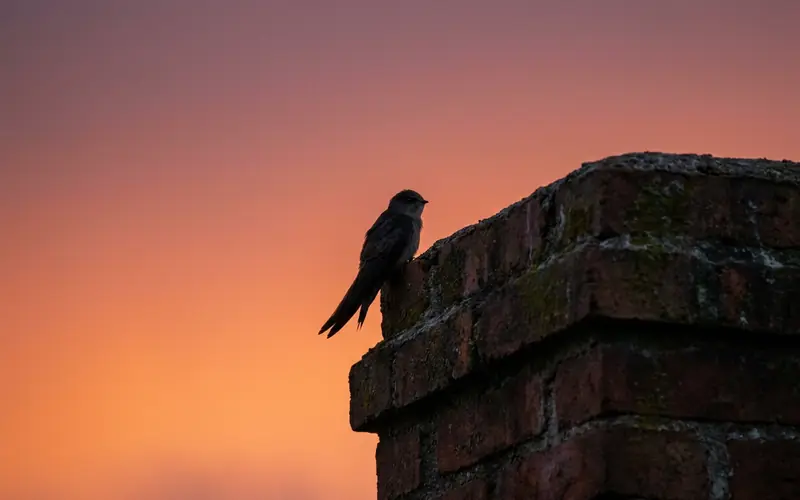
- Chimney swifts are federally protected under the Migratory Bird Treaty Act — active nests, eggs, and young cannot legally be removed or disturbed. Swifts are the summer-chattering tenants; the fix is patience until they depart (usually by early fall), then cleaning and capping. Full details in our Tennessee swifts guide — it’s the one scenario where “wait it out” is both the legal and the correct answer.
- Starlings, sparrows, and other non-protected species are the common nesters in caps and flue tops — their active nests can typically be removed, though the eggs-and-young window still deserves a humane check by someone who knows what they’re looking at.
- Uncertain? That’s what professionals are for. Identifying from droppings, nest structure, and sound is part of the trade — and getting it wrong is a federal offense, so guessing is expensive.
The Removal Sequence (Done Right)
- Stop lighting fires immediately. If you’ve been “trying to smoke them out,” stop — that’s how nest material ignites, and (if the nest is active) it’s also a legal problem, not just a fire one.
- Identify the tenant and the legal status of the nest.
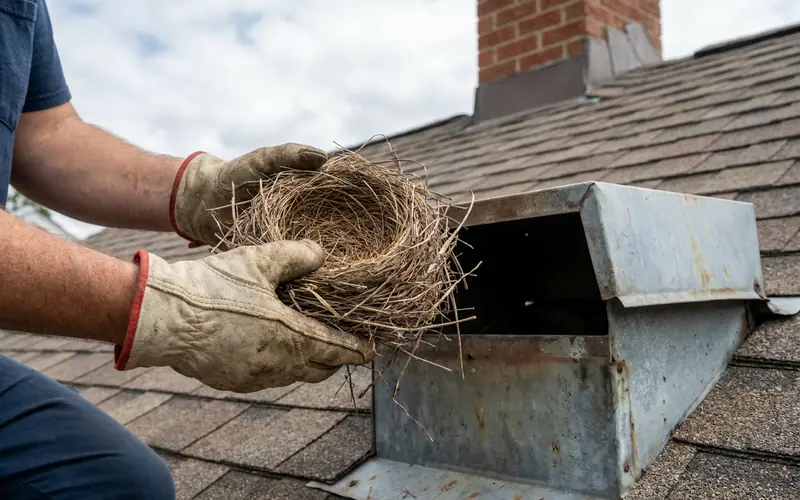
- Remove the nest and debris — by whatever access the situation demands (from above with proper roof safety, or through the firebox with containment), once removal is legal.
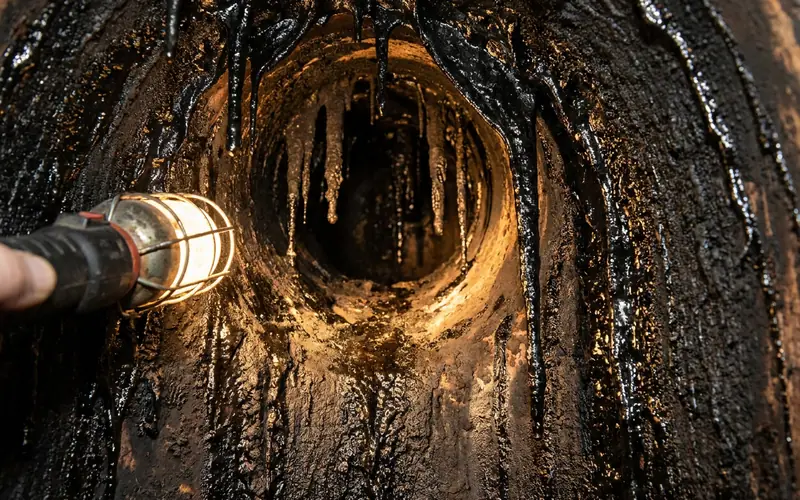
- Sweep the flue fully. Nest removal without sweeping leaves the twig fragments, feather debris, and the droppings-bonded soot that causes the smell. See our chimney sweep service for what the full cleaning includes.
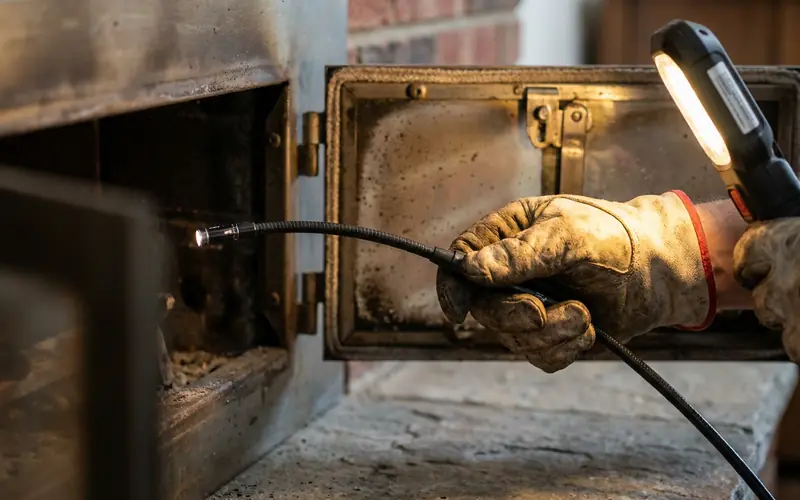
- Inspect on camera. Nests hide problems — moisture damage, shifted tiles, whatever attracted or enabled the tenancy. The camera pass verifies the flue is sound before burning resumes.
- Cap the chimney. This is the step that matters most: see below.
The Cap: Why This Should Never Happen Twice
Removing a nest without capping the flue is re-listing the property. Birds — often the same species, sometimes literally the same pair — return to successful nest sites the following season. A professionally sized stainless cap closes the listing permanently: no birds, no squirrels, no raccoons, and as a standing bonus, no rain pouring directly down your flue and no ember-spark exit at the top.
For East Tennessee homes near the water or up on exposed ridge lots, we spec stainless with storm-rated mesh — the lightest-gauge options rust and fail faster in our weather, and a failed cap is a future nest site.
The October Version of This Problem
Worth underlining: the most common time homeowners discover last summer’s nest is the first cold night of fall — smoke rolls into the room, someone climbs up or calls us, and the diagnosis is a season’s worth of nest, droppings, and blocked draft. It’s why the pre-season sweep exists: catching the nest (and the cap gap) in September, instead of the first fire in November. If you haven’t had the fall burn-season check, this is the exact scenario it prevents.
Hearing activity in the flue now? Call (865) 309-5432 — we’ll identify what’s up there, remove it legally and safely, clean, inspect, and cap it so the story ends this season.