The liner is the most important part of your chimney — and the only part you’ll never see from your living room. It’s the tube inside the masonry that actually carries the fire: smoke, heat, and creosote stay in the liner, and the liner keeps heat off the brick, the framing, and everything combustible in your walls. When the liner fails, the system is unsafe no matter how good the chimney looks from the yard.
Here are the seven signs we tell East Tennessee homeowners to watch for — plus what relining actually involves when the answer turns out to be yes.
1. Cracked or Shifted Flue Tiles (Seen on Camera)
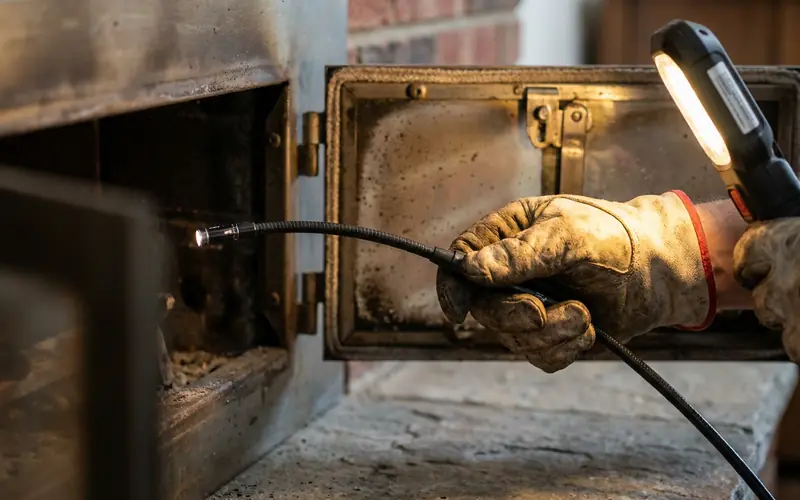
Clay tile liners crack with decades of heat cycling; sections shift and open gaps at the joints. This is the most common finding in homes from Knoxville’s historic districts to the 1950s-era neighborhoods of Oak Ridge and the Tri-Cities. You cannot see it from below — this sign shows up on a Level 2 camera inspection. Gaps and cracks mean heat and creosote reach the masonry and structure behind the tiles: that’s the definition of an unsafe flue.
2. Debris in the Firebox
Mortar crumbs, tile fragments, sandy grit raining down into the firebox — that’s the chimney shedding its liner from the inside. A few crumbs after a loud pop might be spalling masonry; a steady accumulation means the liner is coming apart in place.
3. You Had a Chimney Fire (Even a “Small” One)
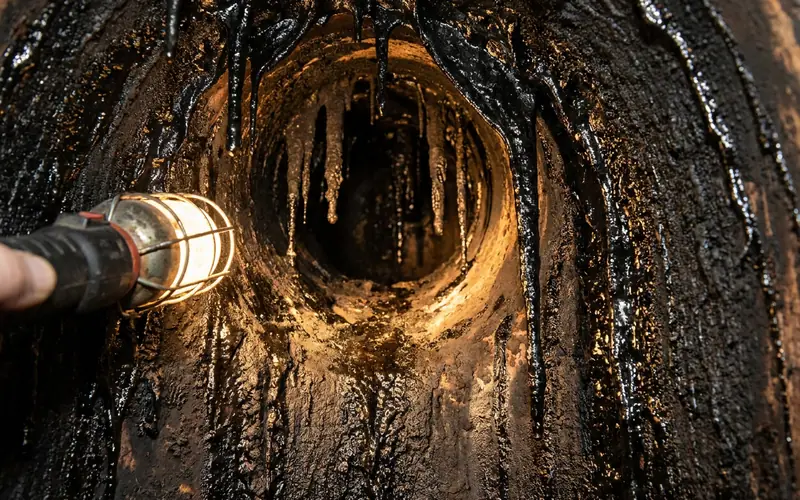
Flue fires run 2,000°F+ — hot enough to crack clay and warp steel. After any chimney fire, the system is presumed unsafe until a camera proves otherwise. Cracked-after-fire liners are among the most common reline jobs we quote, and the Level 2 that finds them is not optional paperwork.
4. You’re Installing a Wood Stove or Insert
Most appliances burn best — and safest — through a flue sized to them, not the old open fireplace the chimney was built for. A stove venting into an oversized flue cools its exhaust, slows draft, and builds creosote faster: the liner is what fixes the physics. If you’re considering an insert or stove, plan the right-sized liner as part of the job, not an upsell to resist.
5. Persistent Draft or Smoke Problems
Smokey rooms, slow starts, fires that won’t stay lit — these get blamed on “the chimney being bad.” Often the actual cause is a flue that’s too large for the appliance, so smoke cools and stalls before it exits. A properly sized liner speeds the draft and fixes the symptom that three “chimney repairs” didn’t touch. (When it’s not sizing, it’s often negative pressure from a tight house — a real diagnosis beats a guess every time.)
6. Efflorescence or Water Staining
White mineral staining on the chimney’s exterior or water marks tracking down interior walls near the chimney both mean moisture is moving through the masonry. A liner in poor condition often contributes — flue gases condense on cold, damaged walls and the moisture migrates outward. It’s a leak-and-liner conversation together, and our leak repair specialists trace it properly.
7. The House Simply Predates Liners
Homes built before roughly the 1940s — and there are plenty across East Tennessee’s older neighborhoods — may have partially lined or fully unlined flues. NFPA 211 is blunt: chimneys in service need a sound liner appropriate to the appliance. An unlined chimney with a fire in it is a known hazard, full stop, and the fix is relining without demolishing sound masonry.
What Relining Actually Involves (In Tennessee)
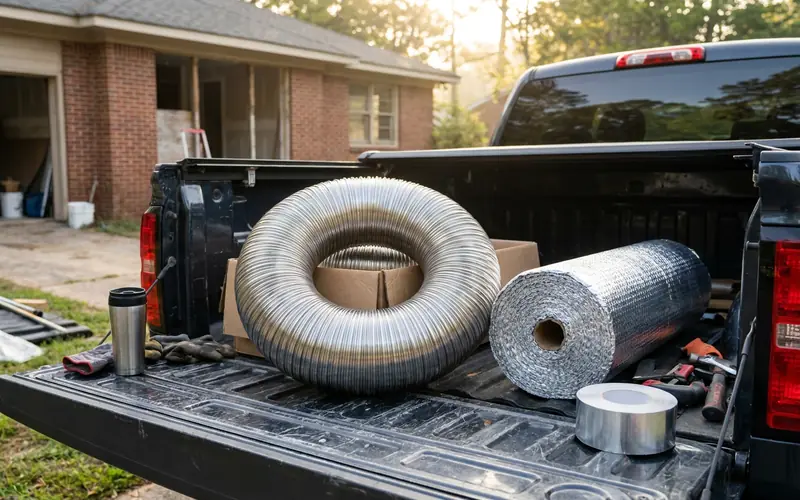
The good news: relining is a one-day job in most homes, and it preserves your chimney — no tear-down. A stainless liner sized to your appliance drops in as a continuous run (insulated where the chimney runs cold), gets sealed at top and bottom with a new top plate and cap, and connects to the appliance or firebox. Final camera pass, draft test, and a written warranty — most manufacturers’ warranties on stainless systems are lifetime and transferable to future owners.
For sound clay-tile liners with leaking joints, there’s a middle path too: HeatShield sealant systems restore the tiles in place at a lower cost than full replacement — right answer sometimes, sales pitch sometimes; the camera tells you which.
Find Out Honestly Which Boat You’re In
Every one of these signs gets resolved the same way: a camera looks at the liner, you see the video, and the recommendation follows the evidence. Book a Level 2 inspection — or call (865) 309-5432 with questions. If your liner’s fine, you’ll hear it from us and enjoy the peace of mind; if it isn’t, you’ll see exactly why.